
Born to Care:
Catalina Hemp and the Legacy Care Home Story

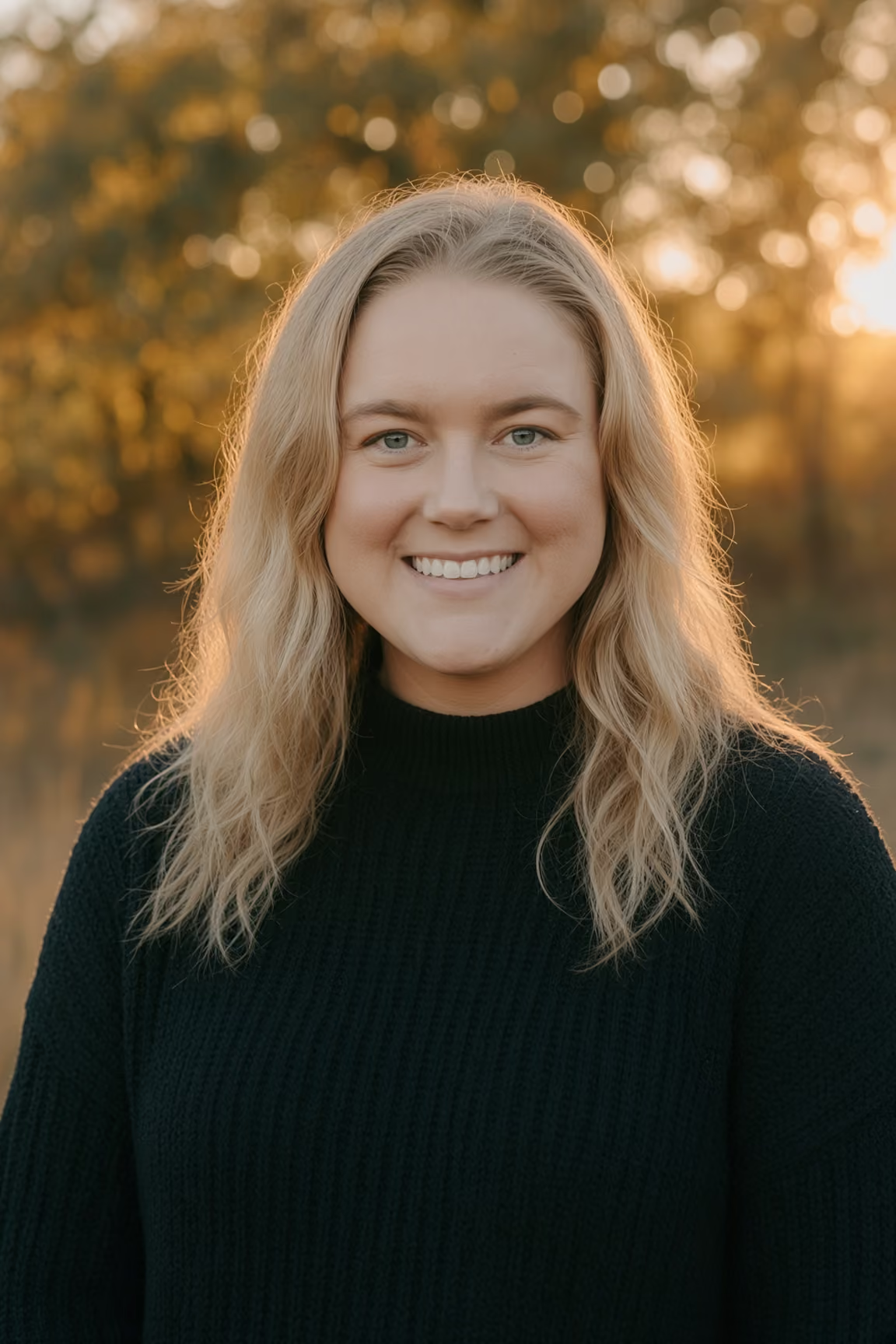
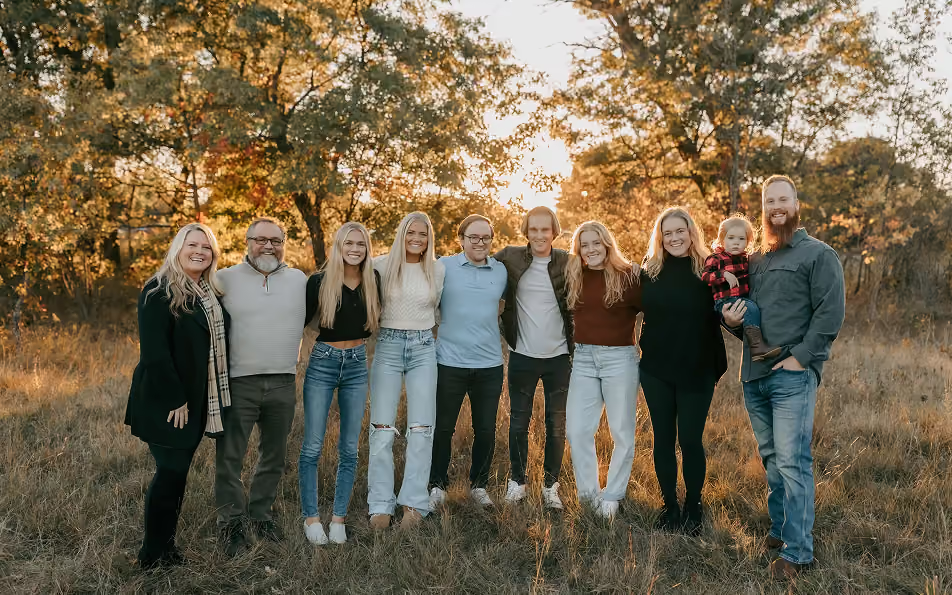
Legacy Care Home owner and Registered Nurse Catalina Hemp was the oldest of six kids.
“There’s a joke in my family that I was like a third parent,” she said. “There’s a 7-year difference between me and the next oldest kid in my family, so I was kind of a caregiver from a young age.”
Some would consider that a burden, but not Cat, as she’s known to most of her friends and family. She recalls a happy childhood growing up in Richfield, Minnesota — hanging out with her brothers and sisters, simultaneously playing, teaching, and taking care of them. It didn’t feel like work, she said. The experience led her to consider nursing or teaching as two potential career paths.
After graduating from high school, Cat decided to become a nursing assistant to dip a toe into the field of nursing. She wanted to make sure she liked it before committing. She loved it, and quickly completed her Certified Nursing Assistant (CNA) training before taking a job at a nursing home in Coon Rapids at the age of 19.
That’s where she saw the yin and the yang of nursing, especially within the geriatric population. She absolutely loved caring for residents and getting to know them personally, but she recalled having to care for 16 or more people at a time, with very little managerial guidance or oversight.
“I was 19 with no experience and no support,” she said. “I felt like I was alone on an island. It was terrifying."
Cat even recalled some caregivers idly chatting or taking breaks when their residents needed their help, while she kept constantly on the move making sure no one felt abandoned. Yet, despite her concerns about the facility’s operations, she recognized quickly that nursing was her calling.
“I knew within a couple of weeks that I wanted to be a nurse — 100%,” she said. “I love people and I love taking care of them. I just knew there had to be a better way to care for them than this.” [Cat said the facility where she first worked is now under new management and is being run much more effectively.]
The idea that there must be “a better way” stuck with her.
As she entered the RN-BSN program at Rasmussen University in Bloomington, MN, she began working as a nursing assistant in a very different setting: a hospital. Cat describes her job as a CNA at Methodist Hospital in St. Louis Park, MN as a “breath of fresh air.” The 8:1 patient-to-staff ratio was much more manageable and she had expert guidance and support. The experience also led to another epiphany:
“Working at the hospital really cemented my love of geriatrics and geriatric nursing,” Cat said. “Our culture often lacks the sense of respect for our elders that you see in other cultures. I really enjoy working with older people and showing them the love and respect I think they deserve. There’s so much we can learn from them — so much I’ve learned from them.”
As she was finishing her nursing degree at Rasmussen, Cat began looking into other models of care for the elderly. She wanted to develop longer-lasting relationships than hospital nursing typically allows, but she definitely didn’t want to return to a nursing home environment.
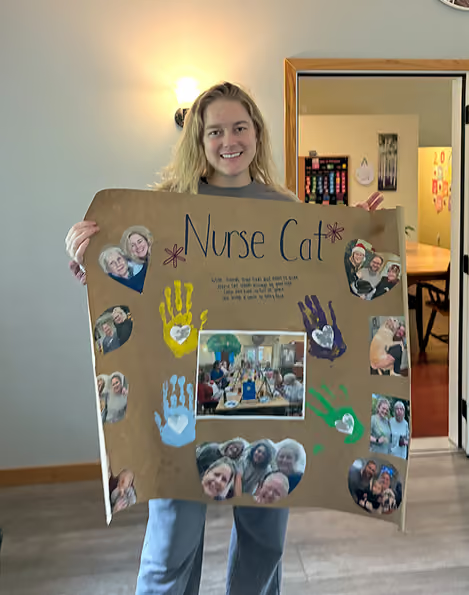
As she was finishing her nursing degree at Rasmussen, Cat began looking into other models of care for the elderly. She wanted to develop longer-lasting relationships than hospital nursing typically allows, but she definitely didn’t want to return to a nursing home environment.
During her initial research she discovered what most people do when looking at options for their aging loved ones: There are large assisted living facilities with hundreds of residents, which can be quite nice in terms of amenities but also very expensive; traditional nursing homes, which theoretically offer 24/7 skilled care but typically have high resident to staff ratios and an institutional feel; or at-home care, which can allow people to age in place in a familiar environment, but can be quite isolating.
Then she discovered another model: The residential care home.
Care homes provide care in a familiar, smaller setting — a residential home in a residential community, with a small number of residents receiving more personalized care, and staffing ratios of 4 or 5 to 1 as opposed to four times higher.
It was then that she realized she could own and operate her own licensed care home and provide care for older people the way she thought it should be provided — a better way. She could hire the kind of people who believed in personalized care the way she did. And she could train them, pay them well, and cultivate the kind of loving environment she found lacking during her first nursing experience. So she began looking.
“I would scour assisted living homes for sale in Minnesota online every night for hours,” Cat recalled. “Many were just too big and too expensive. Some were in disrepair. Then I found Legacy.”
At the time, Legacy Care Home operated three small homes, which Cat felt was just the right size. Importantly, they were also already well run and managed, so she wouldn’t have to completely start from scratch. Still, purchasing three homes and running a business as a late twenty-something was quite a leap of faith.
“I was excited but also very nervous,” Cat recalled. “I put everything I had into it. Thankfully I had someone to partner with who had a lot of business experience.”
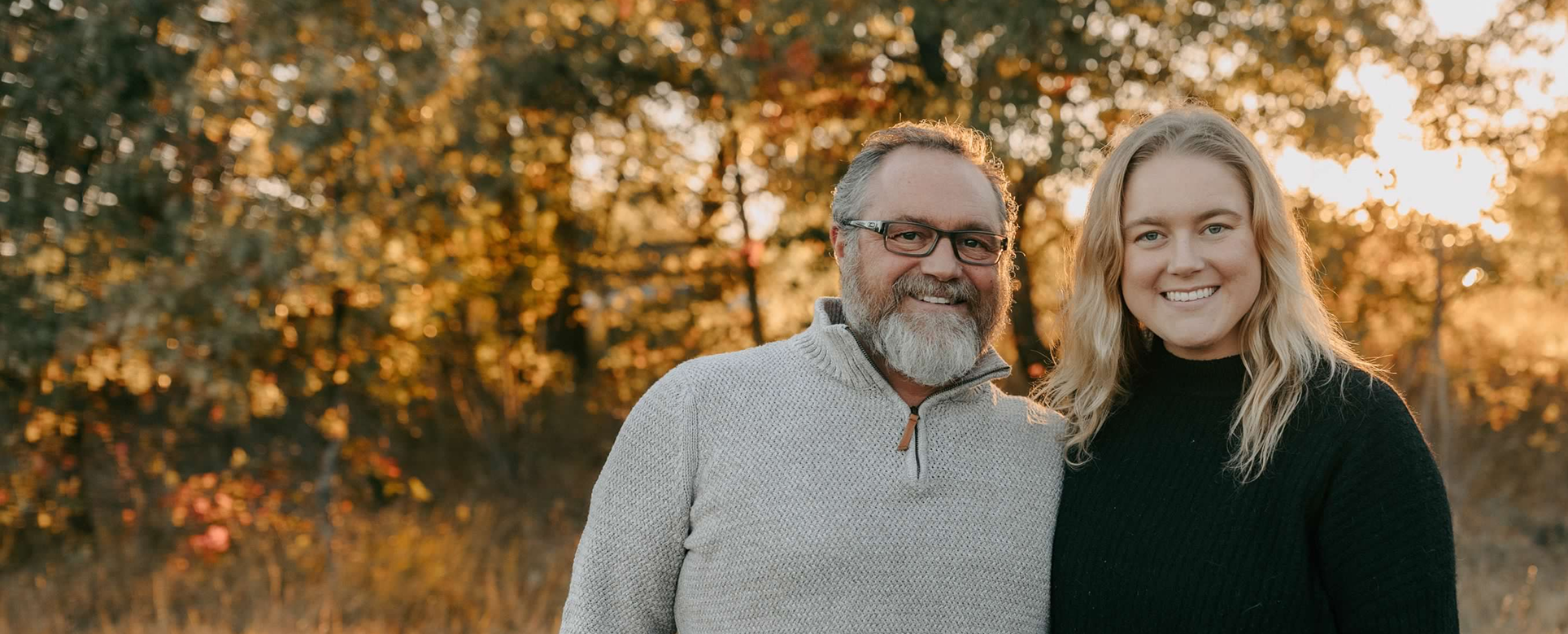
That someone was her father, Jason Hemp — a successful businessman who has started and grown new companies, and turned around existing ones. People are often warned not to mix business and family, but their skills proved complementary and their work styles meshed.
“We work so well together,” observed Cat. “It’s made our relationship stronger and even closer. We connect now on a different level.”
Working together allowed Cat to focus on caregiving, staffing, and culture, while Jason set up payroll, made sure the bills were paid, and managed inventory. They kept one another in the loop and discussed big decisions together. Cat referred to it as “a divide and conquer approach” and said it was essential in the early days.
The early days weren’t free of challenges.
In fact, the Hemps purchased Legacy Care Home in 2020, in the midst of one of the biggest social and economic disruptions of the last century: The COVID-19 pandemic. Starting a new business during a global health crisis and the largest recession since the Great Depression wasn’t easy, particularly since that business involved caring for the population at highest-risk — the elderly.
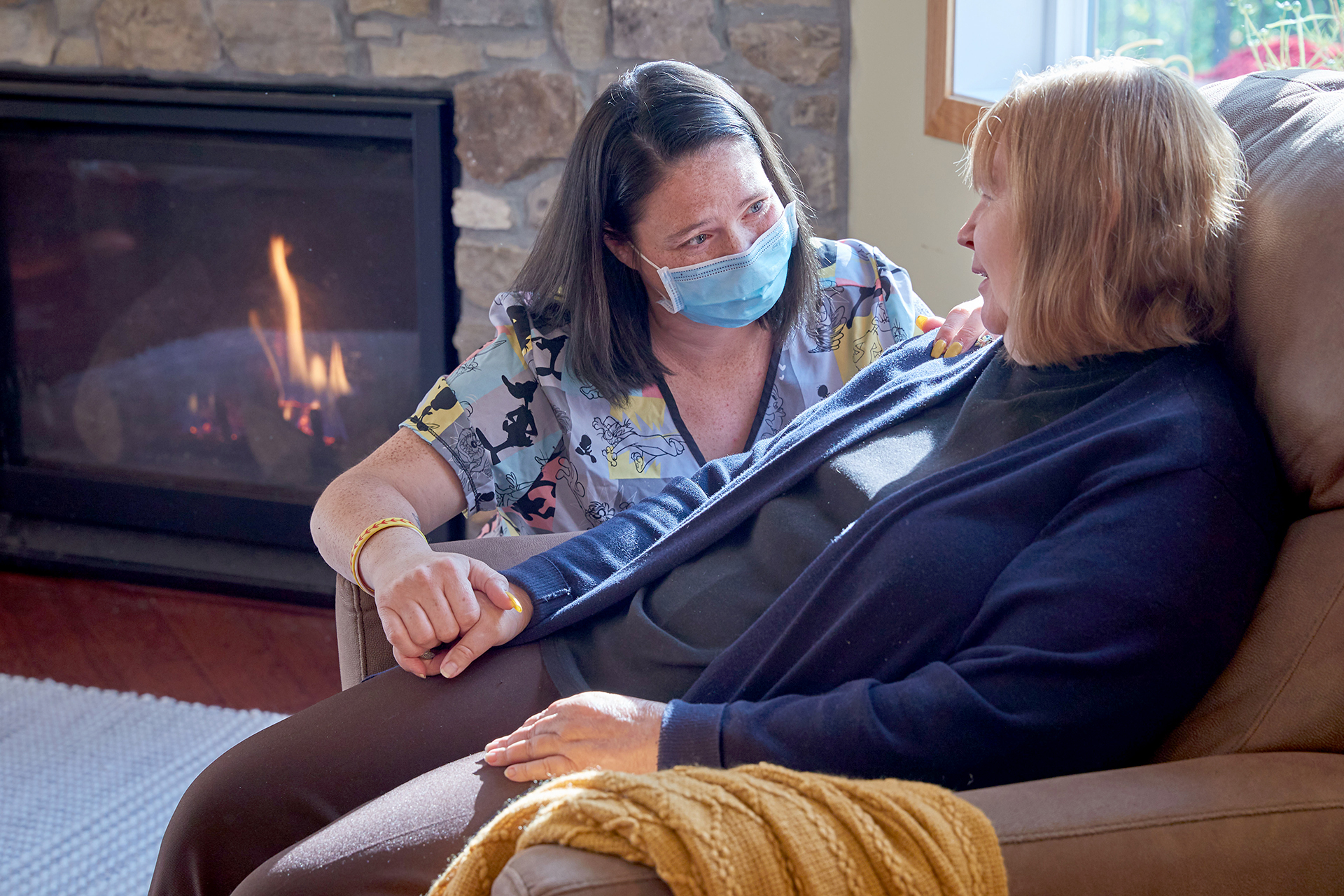
“I was really proud of how we handled it,” Cat said. “We didn’t have a single resident get sick. We were fanatical about disinfecting everything — the moment someone would sniffle we’d all put on our PPE.”
At the same time, they weren’t fanatical about visitors. Unlike many other assisted living and long-term care facilities, they didn’t lock down and they didn’t prevent family and friends from seeing their loved ones. They were just very careful to make sure visitors weren’t sick or exhibiting any symptoms, Cat said.
“It was important to us from the start to help residents avoid the feelings of isolation that many older people were experiencing during the pandemic,” said Cat.
“And that’s still very important to us. That’s why we work hard to help them maintain existing connections and form new ones with our staff and with other residents. It’s also why we’re so welcoming to friends and family. We want them to visit and feel like our homes are an extension of their own.”
.avif)
LCH didn’t just survive the pandemic. They thrived. Within months, Cat said they had a waiting list and added two additional homes. Word spread about their unique approach to personalized care and family-style, small-home living. Even among residential care homes, Legacy is unique, Cat said, since it’s rare for homes to have licensed nurses on staff. It’s also quite rare for them to offer memory care like LCH does, with staff experienced and trained to manage residents with dementia and Alzheimer's.
As a Registered Nurse with her Bachelor of Science in Nursing, Cat has expertise performing needs assessments, monitoring residents’ evolving care needs, and coordinating care with their physicians and specialists as needed.
Since purchasing Legacy Care Home in 2020, Legacy has grown from three to seven locations. They’ve even added a couple of mid-size properties, including two homes with 20-25 beds. But Cat said they’re very careful to ensure they maintain their personalized approach, dedicated staff, and home-like environment. She’s not interested in operating large assisted living facilities.
Whatever they’re doing, it’s working. Legacy continues to maintain a 99% occupancy rate and receive overwhelmingly positive reviews. For Cat — a born caregiver from a large family — it’s all about making sure that everyone (including residents and staff) feels like part of that growing family, in a place that feels like home.